
Search It - Hidden Objects
Leap Game StudiosPuzzle
4.92.78K Reviews
- Version
- 1.4.13
- Installs
- 10.00M
- Age Rating
- Everyone
Screenshots
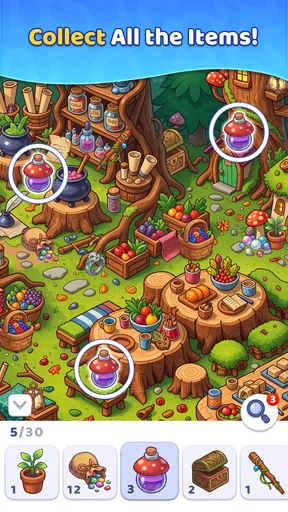
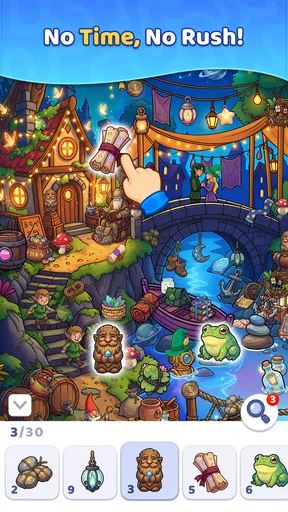
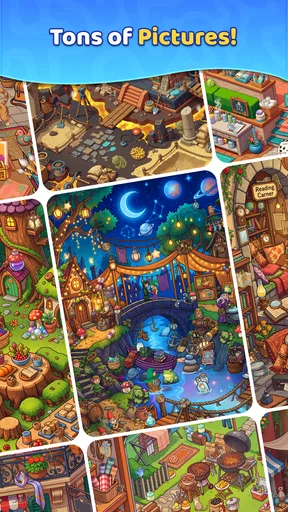

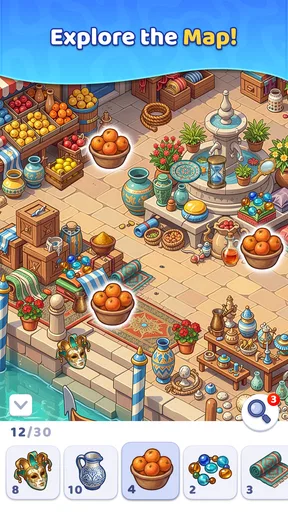
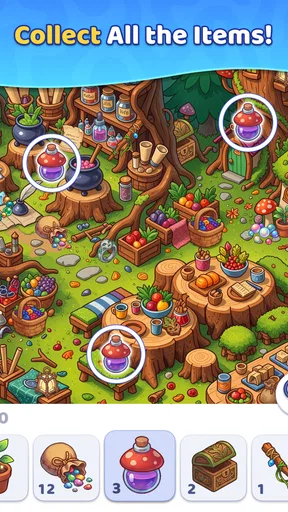
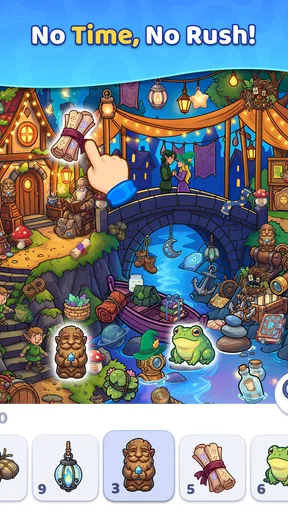
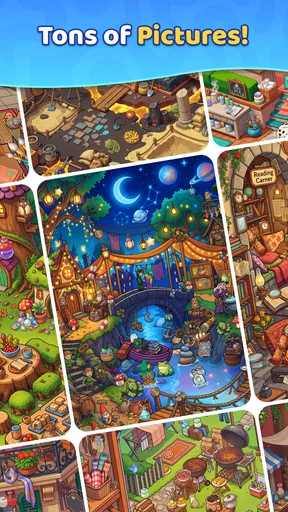
Our Review of Search It - Hidden Objects
 Analysis by Appyee
I spent time with Search It - Hidden Objects as a quiet puzzle game rather than a fast, score-chasing challenge, and that distinction matters. Its basic appeal is easy to understand: you examine a busy scene, look for requested objects, and enjoy the small satisfaction of spotting something that was hiding in plain sight. The experience is deliberately simple, but simple does not always mean shallow. The quality depends on how well the scenes hold your attention, how fair the clues feel, and whether the game remains relaxing once progress starts to matter.
Developed by Leap Game Studios, this is a free hidden-object game for Everyone. It runs on Android devices using version 8.0 or later, and the current version is 1.4.0. The game has built a strong audience, with an average rating of 4.8 from around 134 thousand ratings and more than 5 million installs. Those figures suggest that the central idea works for a broad group of players, although popularity alone does not tell me whether it will suit your patience, eyesight, or preferred way of playing.
What the search experience feels like in everyday play
The first thing I noticed is how naturally this type of puzzle fits into short breaks. I can open it while waiting for an appointment, play for a few minutes before bed, or use it when I want something more engaging than scrolling but less demanding than a traditional strategy game. There is no need to remember a complicated story or learn a large set of controls. The main task stays visible: inspect the picture and find what the game asks for.
That makes the game especially approachable for people who enjoy visual puzzles but do not want timers, combat, or complicated menus. It can also work well as a shared activity. I can imagine two people looking at the same screen and pointing out possible matches, particularly when one person notices shapes or colors that the other overlooks. The Everyone age rating supports that accessible positioning, though younger players may still need help with small details or with resisting the urge to use assistance too quickly.
The most enjoyable moments come from changing the way I scan a scene. Instead of staring randomly, I divide the image into sections, check the edges, then return to areas that contain repeated colors or similar shapes. This is more effective than dragging my eyes across the whole picture again and again. A useful habit is to search by distinctive features first: an unusual outline, a bright color, or an object that would normally have a recognizable silhouette.
That approach reveals one of the game’s better qualities: it rewards attention more than speed. I do not need exceptional reflexes to make progress. I need to slow down, compare details, and avoid assuming that the first object resembling the target is the correct one. For players who like observation puzzles, that can feel pleasantly focused. For anyone who wants constant novelty or rapid decision-making, the pace may feel too gentle.
Why the free entry point matters
Search It - Hidden Objects is free to download and play, with in-app purchases listed from $0.99 to $54.99 per item. That range is important because it creates two very different ways to approach the game. A casual player can treat it as a no-cost visual pastime, while a more committed player may encounter optional spending choices that become relevant during longer sessions.
I would recommend deciding on a personal spending boundary before playing for extended periods. The low end of the purchase range may seem easy to justify in the moment, especially after a difficult search, while the upper end represents a much more substantial commitment. Since the game’s core attraction is the act of looking, I would not spend automatically just to remove every moment of difficulty. A little frustration is often part of the puzzle, and solving a scene without help is more satisfying.
For families, the purchase range is also a reason to check device-level purchase controls before handing over a phone or tablet. That is practical advice rather than a criticism of this particular game. Free games are easiest to enjoy when the person playing understands that optional purchases exist and knows how to avoid accidental spending.
The fair way to judge the game is therefore not to assume that free means completely cost-free in every circumstance. The download price is free, but the optional purchase range should be kept in mind. If you want a puzzle that has no spending layer at all, a paid hidden-object title may be a better fit, even if it asks for money upfront.
Progress without turning every mistake into pressure
Hidden-object games can become surprisingly tense when progress is tied to speed, limited attempts, or repeated requests for help. In my experience, the best way to preserve the relaxing side of this game is to treat each scene as an observation exercise rather than a test of perfection. I pause when my attention starts to narrow, then return with a fresh look instead of tapping everywhere in frustration.
This is also where the game’s simplicity can work against it. If you are hoping for a deep progression system, character development, or a puzzle campaign with a strong narrative, this is unlikely to replace those experiences. Its satisfaction comes from solving individual visual searches. That can be ideal for short sessions, but it may feel repetitive during a long uninterrupted play period.
I found it helpful to change session length depending on difficulty. A short session keeps the scenes feeling fresh and reduces the temptation to rush. A longer session is better when I am in the mood to study images carefully, but it also makes visual fatigue more likely. If the objects begin to blur together, taking a break is more useful than repeatedly revisiting the same corner.
One practical technique is to remember the requested object as a shape rather than a word. If the target is described in a way that allows several interpretations, I look for its outline, orientation, and likely location in the scene. I also avoid assuming that an object must be shown in its most familiar position. A rotated or partly concealed item can be easier to miss than a brightly colored one.
Another useful trade-off is deciding when to stop searching manually. If I have checked the scene methodically and am now tapping based on guesses, assistance may save time. However, using help too early removes the main reason to play. I would reserve it for genuine dead ends, not for every object that takes more than a few seconds to find.
How fair does the challenge feel?
Competitive fairness is not really about player-versus-player balance here. It is about whether the game gives me a reasonable chance to solve a scene through observation rather than pushing me toward spending. That distinction matters in a puzzle built around hidden details. A difficult object can be satisfying when it is well concealed; it becomes annoying when the image makes several candidates look equally plausible.
I judge fairness by asking three questions while playing. Can I understand what kind of object I am looking for? Can I inspect the relevant area without the interface getting in the way? And, after finding the answer, does it feel like something I could reasonably have noticed? When the answer to all three is yes, the challenge feels earned. When the answer is no, a hint feels less like a convenience and more like a requirement.
That is also why I would not compare this game directly with competitive puzzle apps. There is no reason to judge it by leaderboards or reaction speed. Its fair-play standard is closer to a printed puzzle book: the image should be challenging, but the solution should make sense once it is revealed. Players who enjoy calm concentration will probably appreciate that style more than people who want measurable performance.
Spending can affect how fair a free puzzle feels, even when purchases are optional. If a player can buy help, the temptation is always present, especially after a long search. My advice is to separate the two experiences mentally. First, try a structured scan. Second, take a short break if your eyes are tired. Only then decide whether assistance is worth paying for. This keeps the purchase from becoming an automatic response to ordinary puzzle difficulty.
Compared with a fully paid hidden-object game, this title has the advantage of a low barrier to entry. You can test whether the visual style and search rhythm suit you without committing upfront. A paid alternative may offer a cleaner purchase relationship, while a free game can be more convenient for occasional play. Neither model is automatically fairer; the better choice depends on whether you prefer paying once or keeping the initial cost at zero while managing optional purchases.
Who will enjoy it, and who should skip it?
I would point this game toward players who like visual concentration, gentle puzzles, and sessions that can begin and end quickly. It is a good candidate for someone who wants to relax with a phone rather than compete against it. It may also appeal to people who enjoy comparing details in illustrations and do not need a story to give every level a larger purpose.
I would be more cautious about recommending it to players with limited patience for repeated visual searching. If you dislike scanning cluttered pictures, the basic mechanic will not change enough to rescue the experience. It is also not the right choice if your ideal puzzle game involves logic grids, wordplay, physics, or complex deduction. The challenge here is recognition and attention, not multi-step reasoning.
Players with visual fatigue should approach it in short sessions and use a comfortable screen setting. Tiny details can be tiring, and forcing yourself to continue can turn a relaxing game into an unpleasant chore. I would also avoid using it as a background activity while watching television. The game rewards focused looking, so splitting attention makes the search feel slower and less fair.
For a realistic everyday example, imagine having ten minutes before leaving for work. This is the sort of gap where the game makes sense: open it, solve part of a scene, and stop without needing to remember a complicated plot. On a quiet evening, though, I would probably choose a richer puzzle game if I wanted a longer, more varied session.
What I would check before spending time or money
The game’s current version is 1.4.0, and Android compatibility begins at version 8.0. That makes the basic device question straightforward: if your phone or tablet uses an older Android release, it is not a suitable match. On a compatible device, I would still judge the experience by screen size. A larger display can make visual searching more comfortable, while a small phone may require more concentration and occasional zoom-like inspection if the game’s presentation makes details compact.
I would also decide whether the free model fits my habits. If I am disciplined about ignoring optional purchases, the game can remain a simple no-cost pastime. If I tend to buy hints whenever I get stuck, the listed purchase range deserves more attention before I begin. The upper end is not a trivial impulse purchase, so setting a limit in advance is sensible.
One unknown that matters to some players is how much variety they personally need before a hidden-object format starts to feel repetitive. I would not promise unlimited freshness. The safest expectation is that the pleasure comes from individual searches and the satisfaction of noticing details, not from a constantly changing genre. If you need a strong story, evolving mechanics, or a clear long-term goal, look elsewhere.
The same applies to accessibility expectations. The Everyone rating tells me the game is broadly suitable by age, but that does not automatically mean every scene will be comfortable for every player. People who struggle with small visual elements should judge it on their own device and take regular breaks. A tablet may be preferable to a compact phone simply because the search area is easier to study.
My trust verdict after weighing the trade-offs
My overall view is positive, with a clear condition: Search It - Hidden Objects works best when I treat it as a calm visual break, not as an endless progression game. Leap Game Studios has chosen a familiar puzzle format and made it accessible enough for casual players, while the strong average rating and audience size show that many people find the formula appealing.
The free price is a genuine advantage for trying it, but the in-app purchase range means I would not hand the device to a child without purchase protections. I also would not use spending as a substitute for patience. The game is most rewarding when I solve a difficult search through a careful method, and least rewarding when I feel pushed to remove the challenge immediately.
My practical recommendation is to play in short, focused sessions, scan scenes systematically, and set a spending limit before you begin. That approach preserves the relaxing quality while reducing the main source of friction. If you enjoy finding visual details and want a free puzzle to fill small gaps in the day, this is worth trying. If you want deep logic, a narrative campaign, or a completely purchase-free experience, a different puzzle format will serve you better.
In the end, I see it as a pleasant specialist rather than an all-purpose game. It does one thing—turning careful observation into a small moment of satisfaction—and that focus is both its strength and its limitation. For the right player, Search It - Hidden Objects is an easy game to return to when the goal is to slow down, look closely, and solve something without pressure.
Privacy and Permissions
See what permissions an app requests and how it handles your data.
- Wi-Fi connection information
- view Wi-Fi connections
- Other
- view network connections, full network access, control vibration, prevent device from sleeping, Google Play license check, read Google service configuration
Verdict
Strengths of Search It - Hidden Objects
- Large variety of hidden-object scenes keeps gameplay feeling fresh.
- Simple tap controls make it accessible for casual players of all ages.
- Helpful hints are available when a scene becomes difficult.
- Short levels fit well into quick gaming sessions.
- Bright artwork makes small objects easier to distinguish.
Limitations of Search It - Hidden Objects
- Some scenes may feel repetitive after extended play.
- Hints and other boosts can be limited without watching ads.
- Small objects may be difficult to spot on smaller phone screens.
- Difficulty can vary noticeably between individual levels.
- Frequent advertisements may interrupt the flow of gameplay.
Similar Picks in This Category
View All
Block Blast!
HungryStudio4.8

Braindom: Brain Games Test
Lahana Game Studio4.6

AMAZE!
CrazyLabs LTD4.6

Sudoku - Classic Sudoku Puzzle
Oakever Games4.7

Art Puzzle - Puzzle Games
Easybrain4.8

Amaze GO!
Oakever Games4.9
Frequently Asked Questions
What is Search It - Hidden Objects?
Search It - Hidden Objects is a casual puzzle game focused on finding carefully concealed items within detailed illustrated scenes. Each level challenges you to examine the picture, identify the requested objects, and complete the search within the available conditions. It is designed for short play sessions, but the increasing difficulty and variety of scenes can make it enjoyable for players who like observation games and relaxing visual challenges.
How do you play Search It - Hidden Objects?
Gameplay is straightforward: a scene appears on screen together with a list or selection of objects you need to find. You tap the items when you spot them, while paying close attention to colors, shapes, backgrounds, and small visual details. Some objects may be partially hidden or blended into the environment, so rushing can lead to mistakes. Progress generally depends on completing each search scene successfully.
Is Search It - Hidden Objects free to download and play?
The game is generally available as a free download, allowing you to begin playing without paying upfront. However, free mobile games may include advertising, optional purchases, or other limits connected with progression and extra assistance. Before downloading, it is worth checking the current store listing for the exact purchase options, advertising policy, and whether hints or additional content require payment.
Does Search It - Hidden Objects work offline?
Many hidden-object levels can often be played without a continuous internet connection, which makes this type of game convenient for travel or moments when mobile data is unavailable. Nevertheless, an internet connection may still be needed for advertisements, updates, cloud-related features, or in-app purchases. Offline behavior can vary by version and device, so testing the game after installation is recommended.
Is Search It - Hidden Objects suitable for children and casual players?
Search It - Hidden Objects is generally approachable for casual players because its basic controls are simple and do not require fast reflexes or previous gaming experience. It can also encourage concentration and visual observation. Parents should still review the game’s age rating, advertising, in-app purchase settings, and privacy information, since the suitability of the content may depend on the child’s age and the device’s account controls.
Play our best games!


